Case summary
The camera reported write errors, and the card disappeared completely from readers.
The customer first noticed errors when the camera tried to save new pictures. When the 16GB Kingston microSDHC card was connected to a computer through an external reader, it did not appear at all. Lab testing confirmed that the card would not communicate through the standard SD interface, ruling out a simple file-system or deleted-photo problem.
Reviewed by Michael Avraham, Lead Data Recovery Specialist at OmniDataPlus.
Device
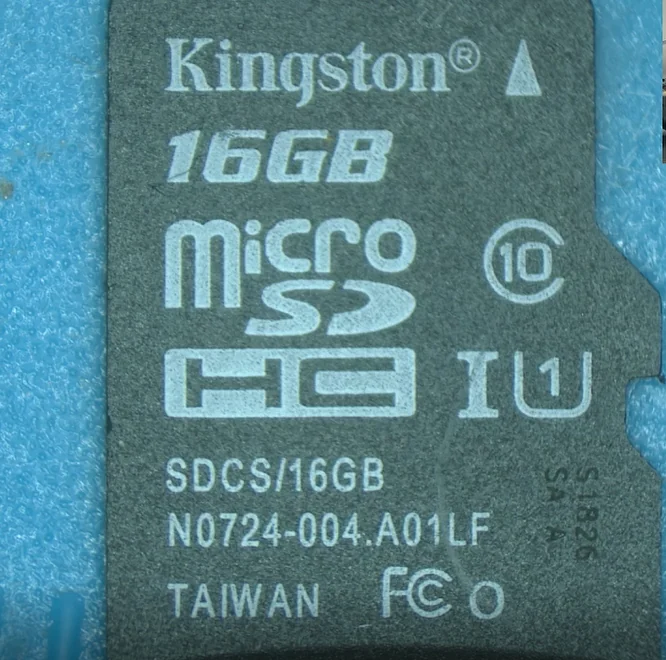
Kingston 16GB microSDHC camera storage card.
Failure
No communication through the card's normal SD interface.
Diagnosis
No short between VSS and VCC; controller or controller-firmware failure was strongly suspected.
Outcome
100% successful recovery by direct NAND reading and VNR reconstruction.
Diagnosis
The NAND memory remained electrically accessible even though the controller did not.
Voltage-rail testing found no short between VSS and VCC. With no response through the standard card protocol, the evidence pointed toward a failed controller or corrupted controller firmware. Conventional recovery software and external readers could not reach the stored data because every normal access request depended on that failed controller.
Recovery process
The failed controller was bypassed through the card's technical pins.
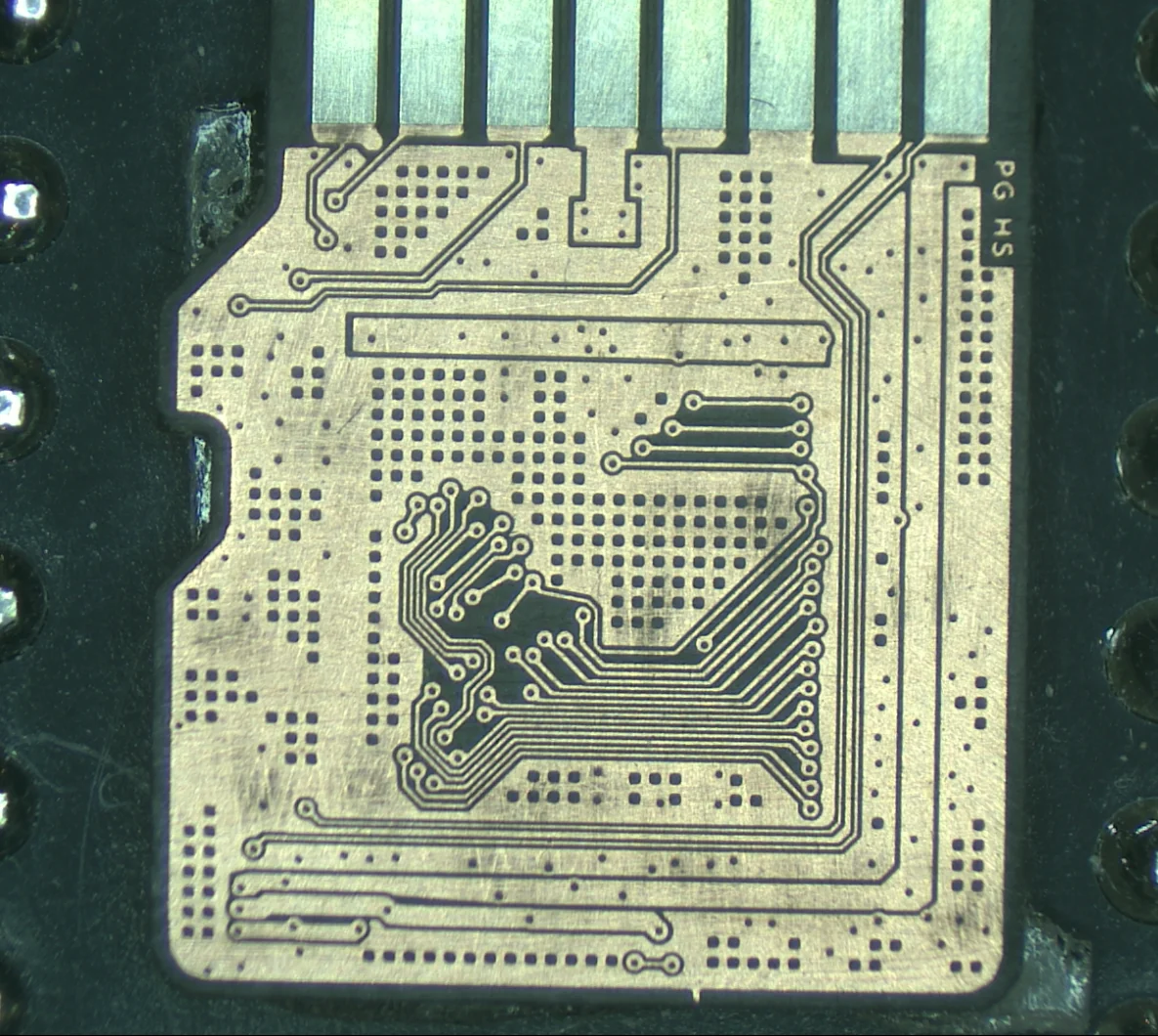
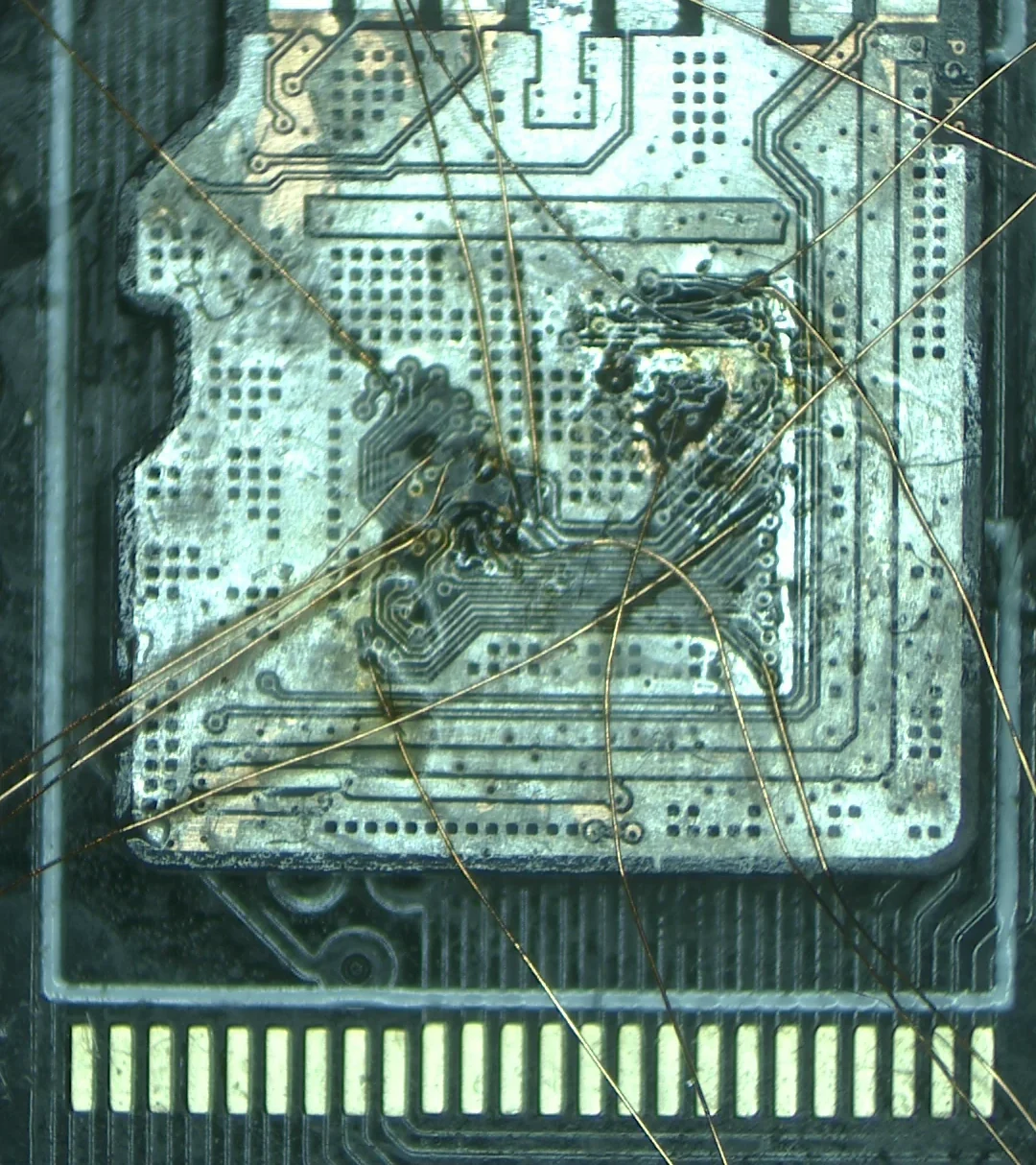
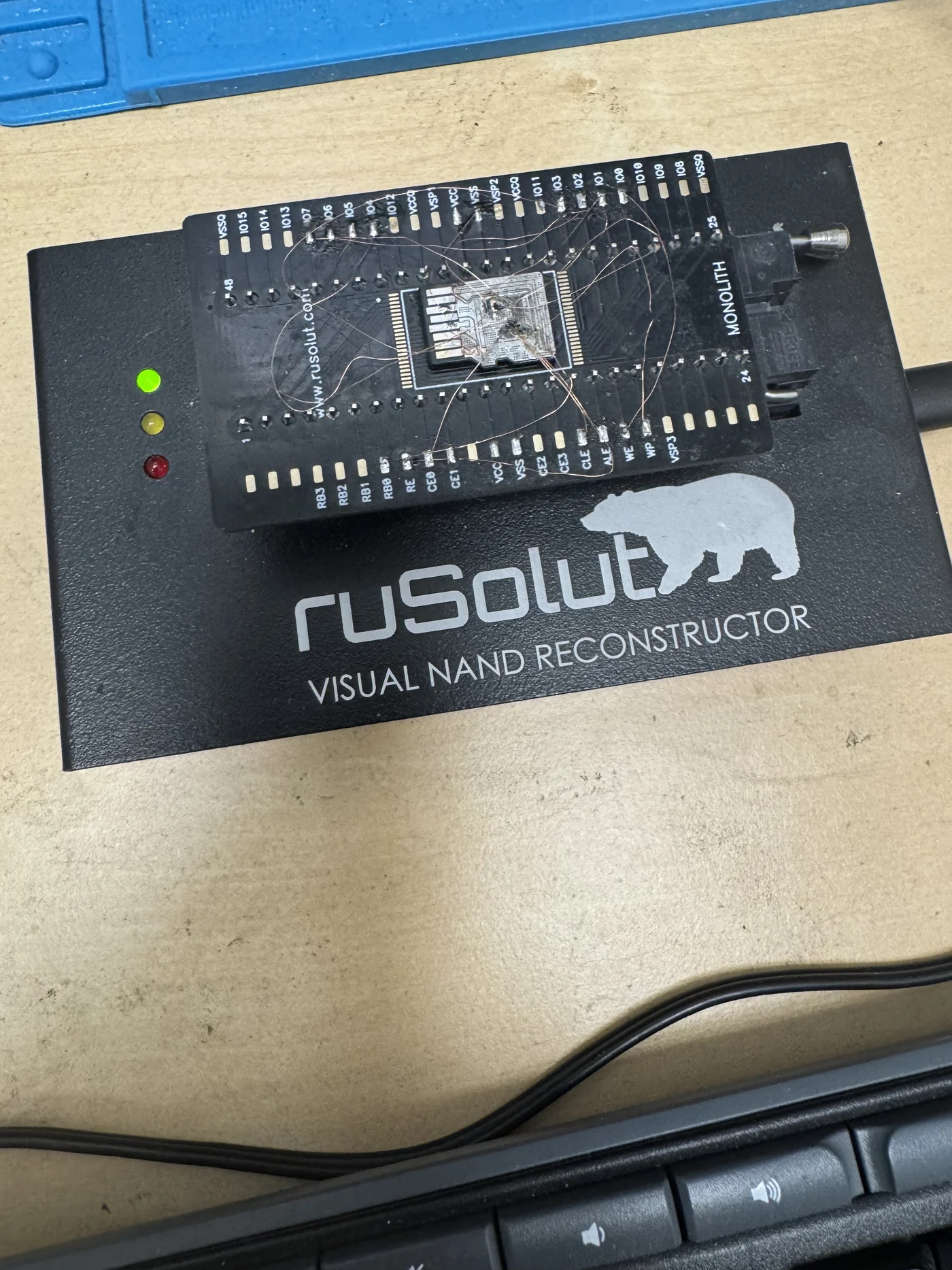
The card used an uncommon GLPN-type controller, making the case more complex than a typical microSD recovery. Its internal circuitry was exposed and the NAND technical-pin layout identified under magnification. Fine wires were connected to the required signal points, allowing the raw NAND memory to be read directly with Rusolut hardware. This produced a physical NAND image independent of the card's failed normal interface.
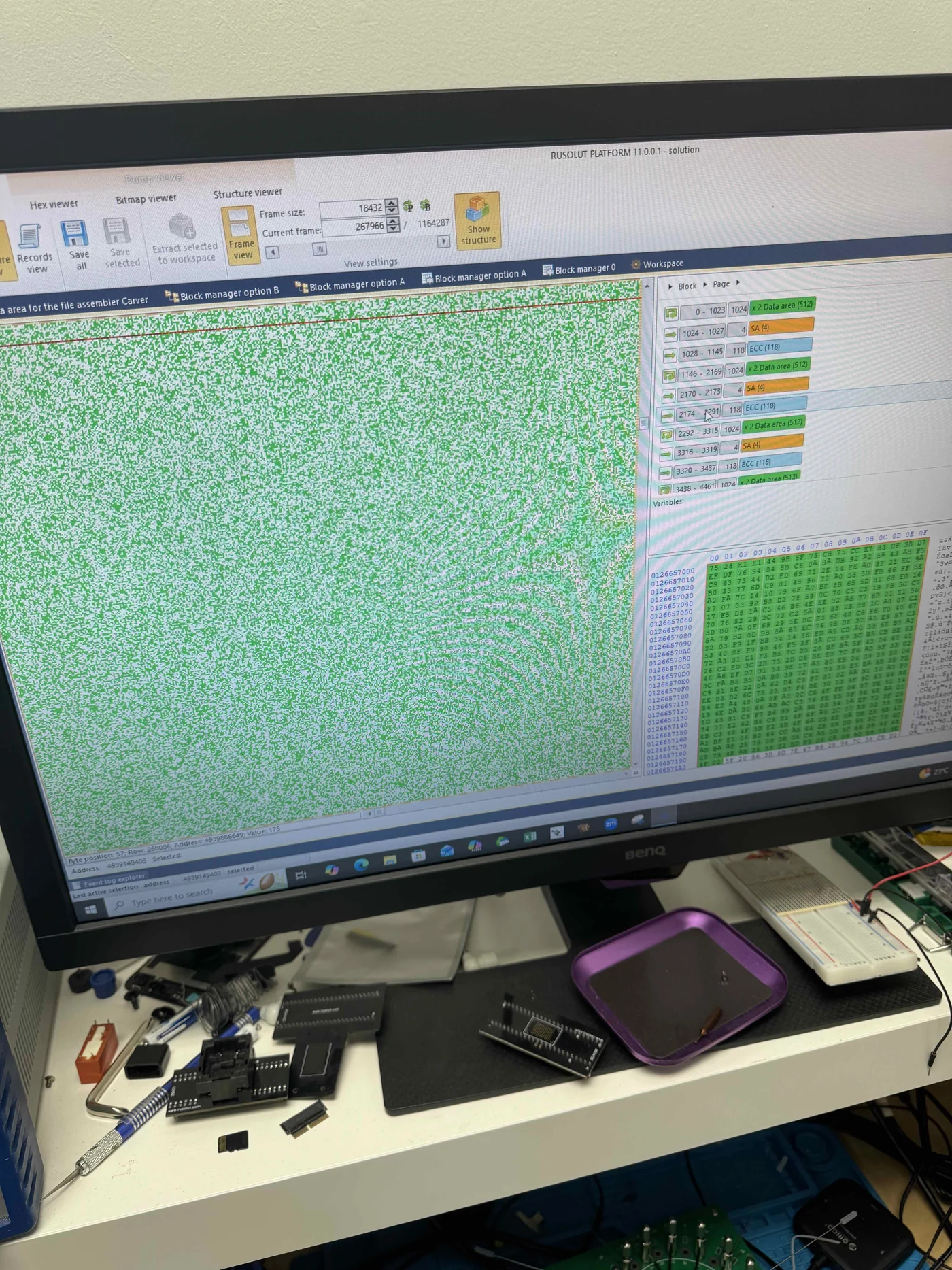
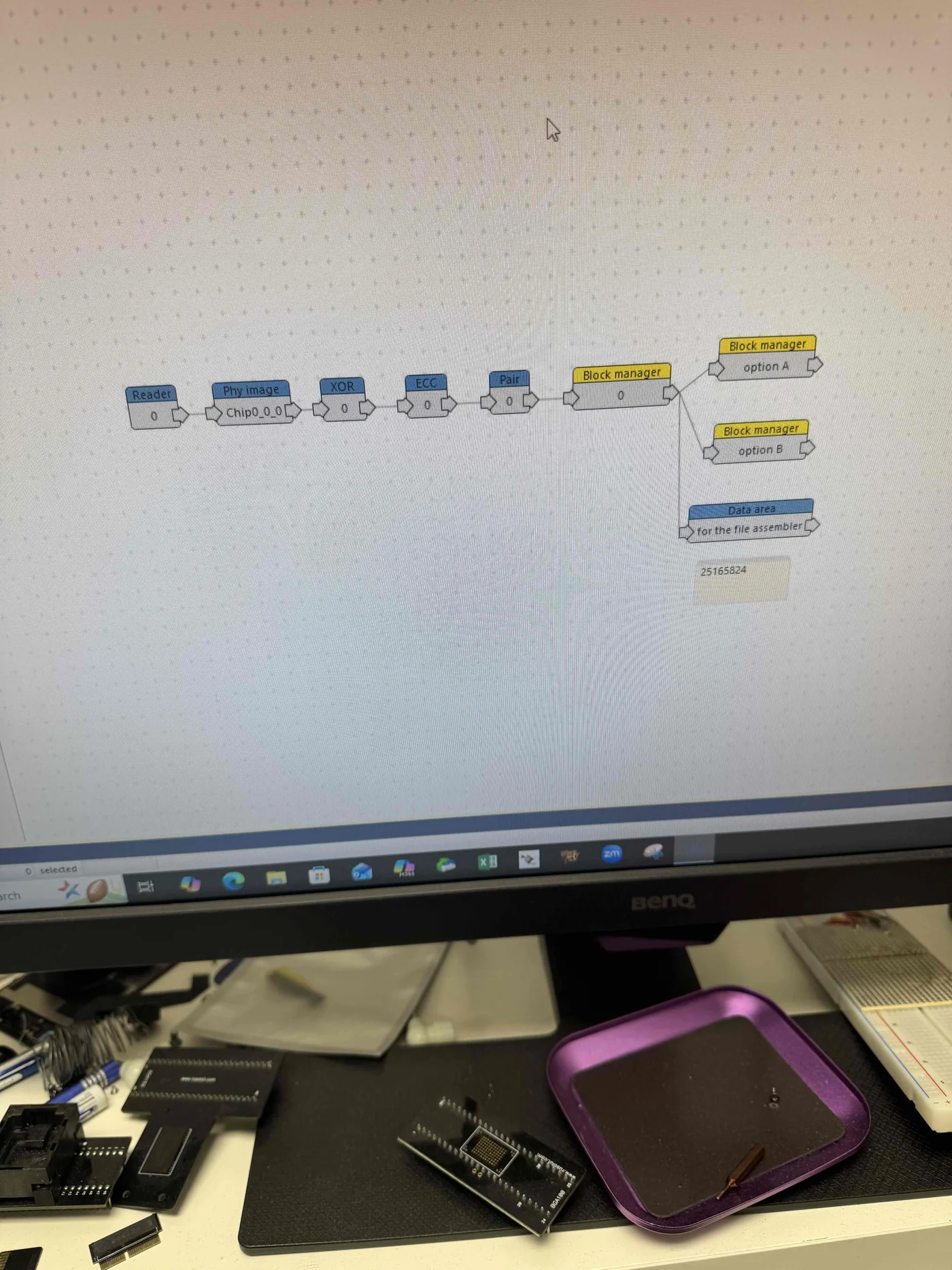
The raw read was then processed in Visual NAND Reconstructor. Page structure, error correction, XOR, pairing, block management, and data-area assembly were analyzed to reproduce the controller's NAND translation as far as possible. The original filesystem could not be reconstructed, so recovery had to proceed as a raw, file-signature-based extraction rather than by restoring the original folder and filename structure.
Outcome
All recoverable camera data was reconstructed successfully.
The direct technical-pin read and VNR reconstruction produced a 100% successful recovery. The reconstructed files were verified before delivery on separate storage media.
Lab photos
Direct NAND access and reconstruction from the actual case.