Case summary
The laptop was liquid damaged, but the critical failure was on the SSD.
The customer brought in a laptop after a liquid spill. In many cases, the laptop repair is not the most important part of the job. The question is whether the storage device that holds the files can still be safely powered, identified, and read.
Reviewed by Michael Avraham, Lead Data Recovery Specialist at OmniDataPlus.
In this case, the 1TB NVMe SSD had liquid exposure on the drive itself. Lab diagnosis found an electronic fault on the SSD PCB, including a failed capacitor. The recovery path required board-level repair and cleaning before the drive could be accessed safely.
Device
1TB NVMe SSD removed from a liquid-damaged laptop.
Failure
Liquid damage on the SSD PCB with failed capacitor behavior.
Main challenge
Restore safe electronic operation without stressing the controller or NAND.
Recovery path
Ultrasonic cleaning, PCB-level repair, controlled access, and data verification.
Lab diagnosis
Liquid-damaged SSDs should not be treated like simple file-system problems.
When liquid reaches an SSD, corrosion and shorted components can prevent the drive from powering correctly. Trying adapters, external enclosures, or repeated boot attempts can make the damage worse if the failure is electrical.
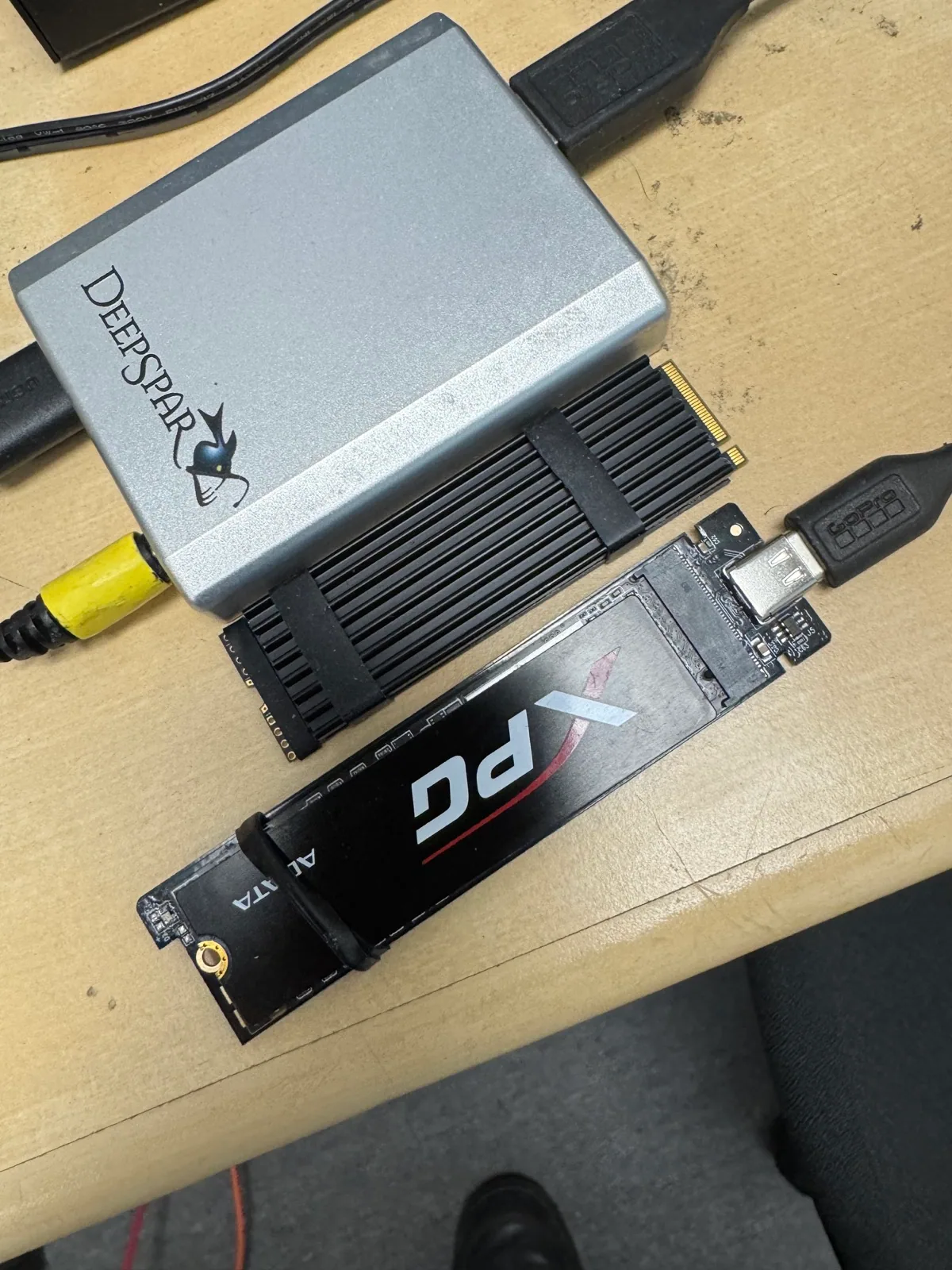
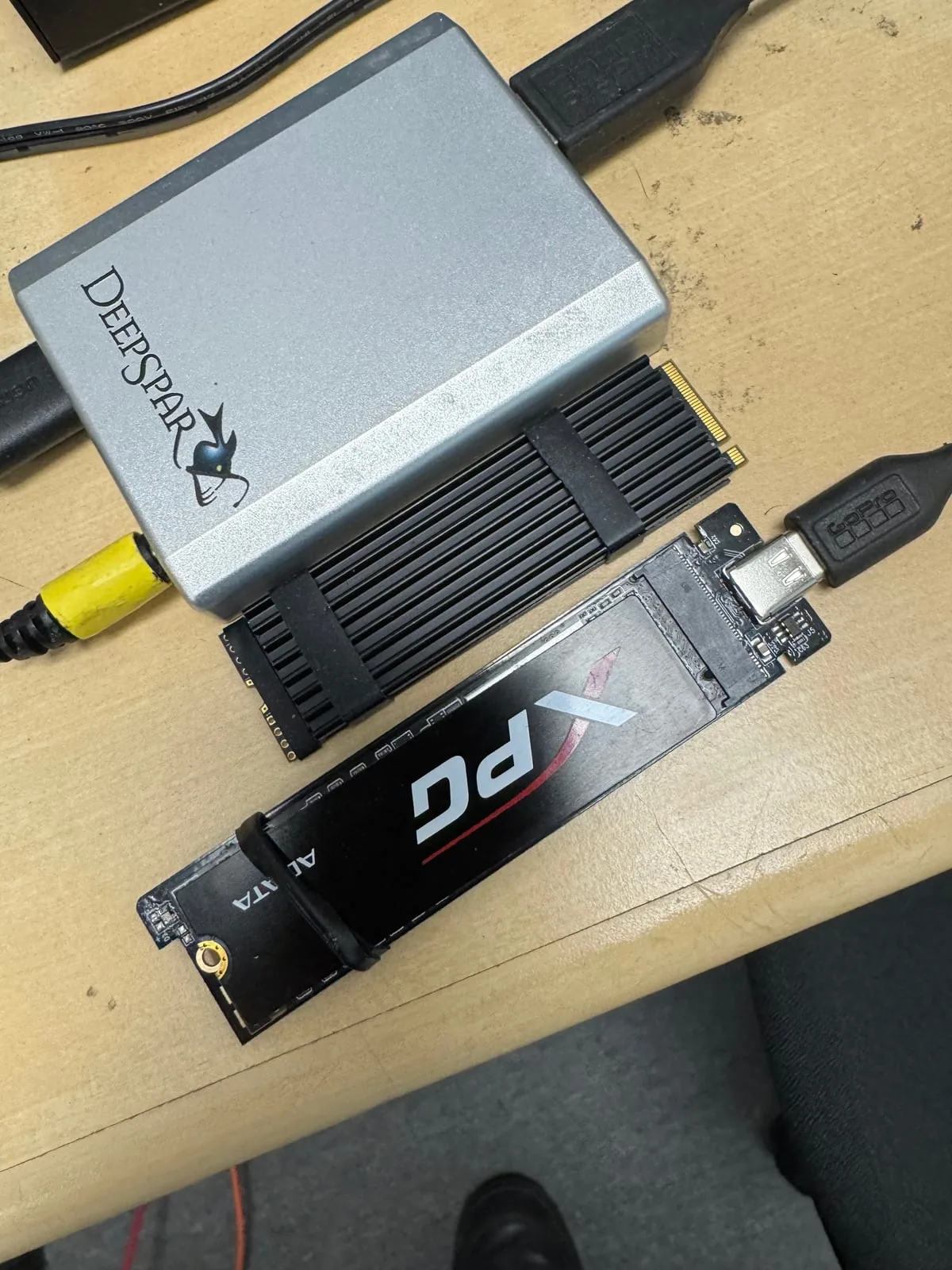
The first step was to inspect and test the NVMe SSD at the board level. Once the failed capacitor was identified, the drive could be cleaned and repaired in a controlled way instead of being forced through normal computer access.
Electronics repair
The solution was electronic repair plus ultrasonic cleaning.
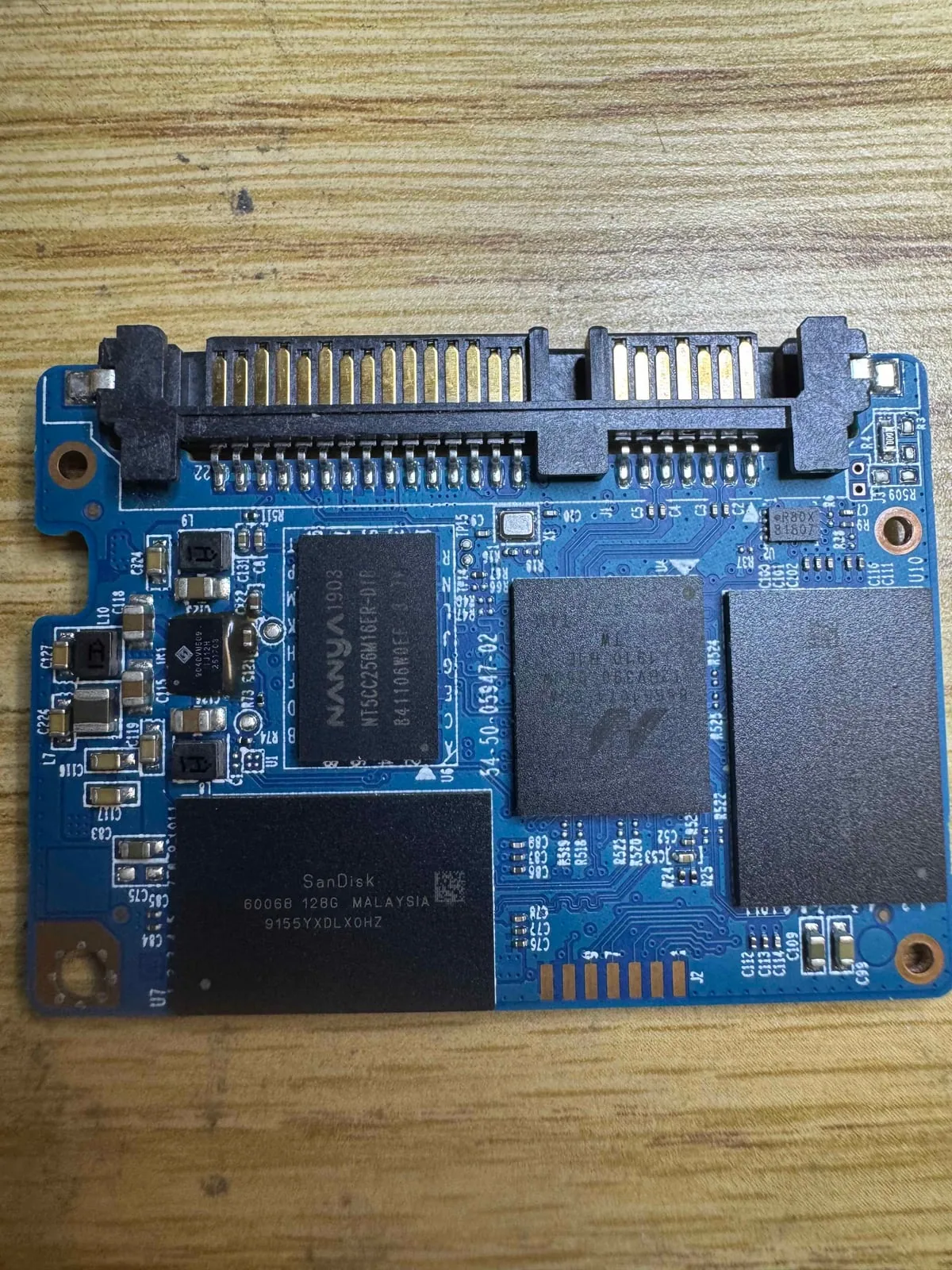
The SSD PCB was cleaned to remove liquid residue and reduce the risk of continued oxidation. The failed capacitor was addressed as part of the board-level repair process so the drive could operate normally long enough for recovery.
This is where data recovery and microsoldering overlap. The goal is not cosmetic laptop repair. The goal is to make the original storage device stable enough to access the encrypted, controller-managed data through the safest available path.
Outcome
The repaired NVMe SSD became fully operational and the data was recovered.
After cleaning and electronic repair, the SSD was able to operate and the recovery workflow confirmed access to the customer data. The final result was full data recovery from the 1TB NVMe SSD.
The key lesson from this case is simple: after liquid damage, do not keep testing the laptop or the drive. Bring the device to the lab quickly, explain exactly what happened, and let the storage device be assessed before power is applied again.
Lab photos
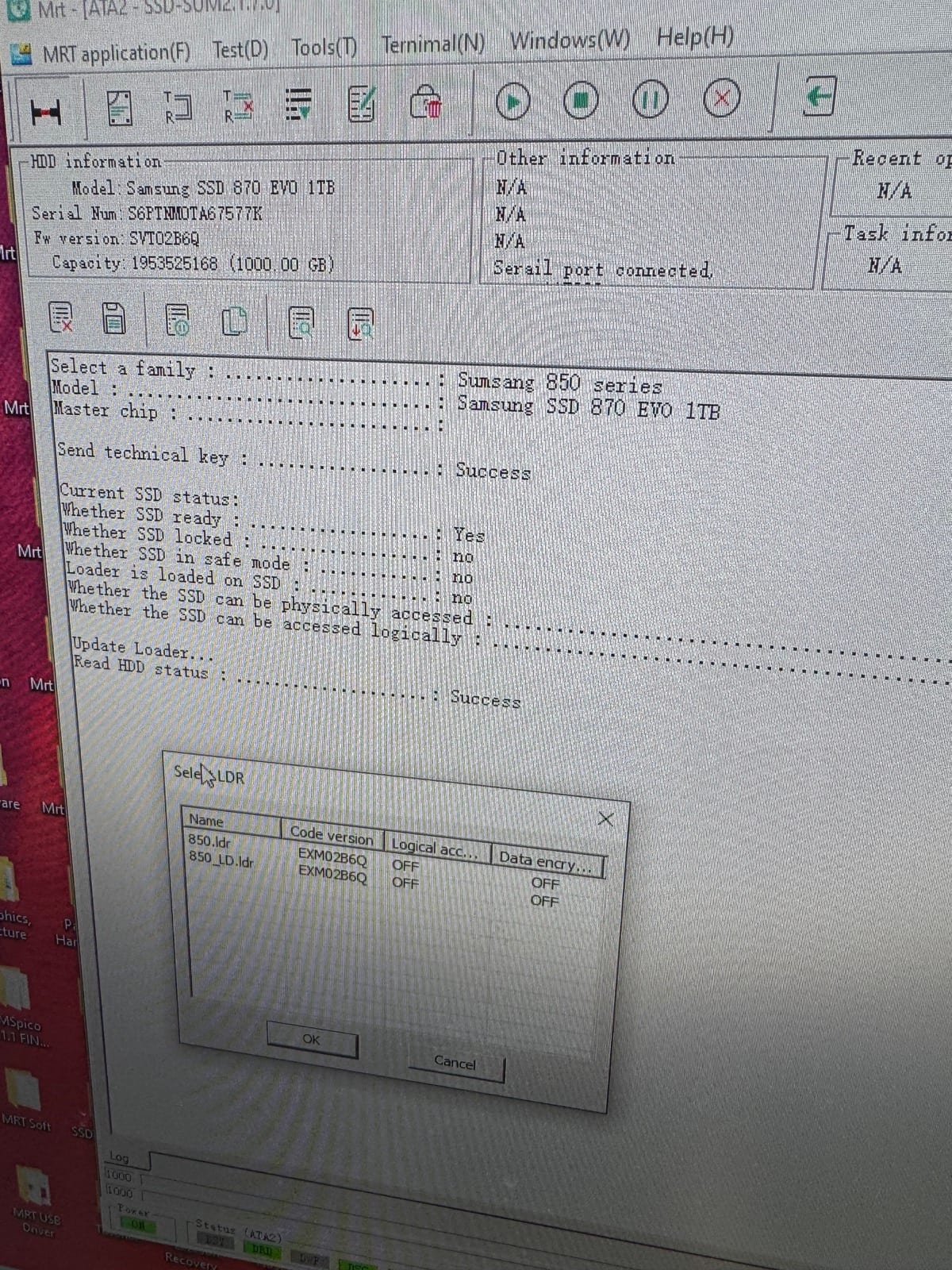
NVMe SSD liquid damage recovery workflow.