Case summary
A dropped external drive required a physical recovery path.
The native-USB WD drive suffered severe head and platter damage after being dropped. Repeated power attempts would have risked increasing the damage and reducing the readable area.
Reviewed by Michael Avraham, Lead Data Recovery Specialist at OmniDataPlus.
Device
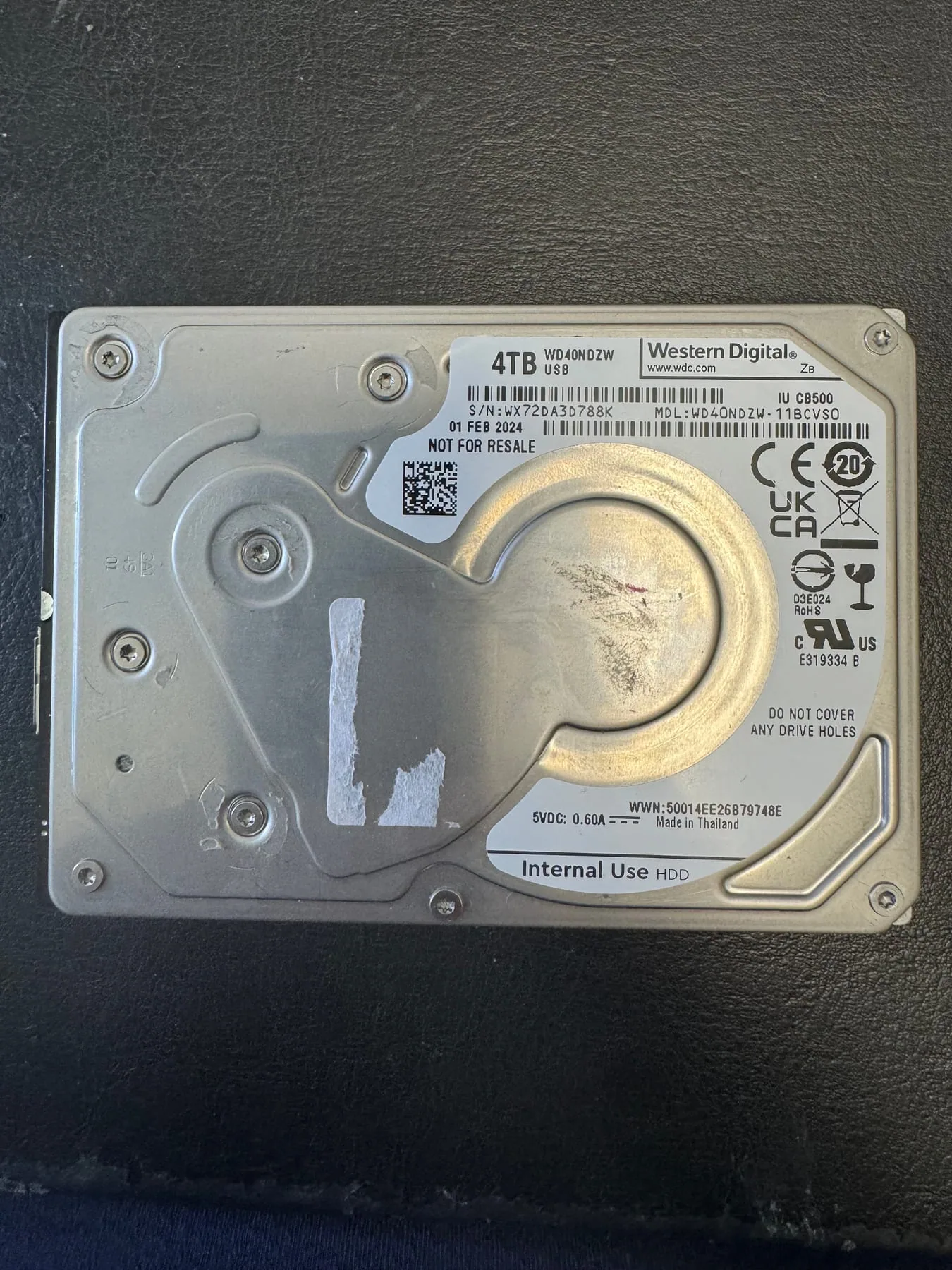
WD 4TB native-USB external hard drive.
Failure
Drop damage caused failed heads and platter contamination.
Main challenge
Unstable media required careful handling and many optimized read passes.
Recovery path
Decontamination, donor components, USB-to-SATA conversion, and controlled imaging.
What physical recovery means
Stabilizing a damaged drive before reading the media.
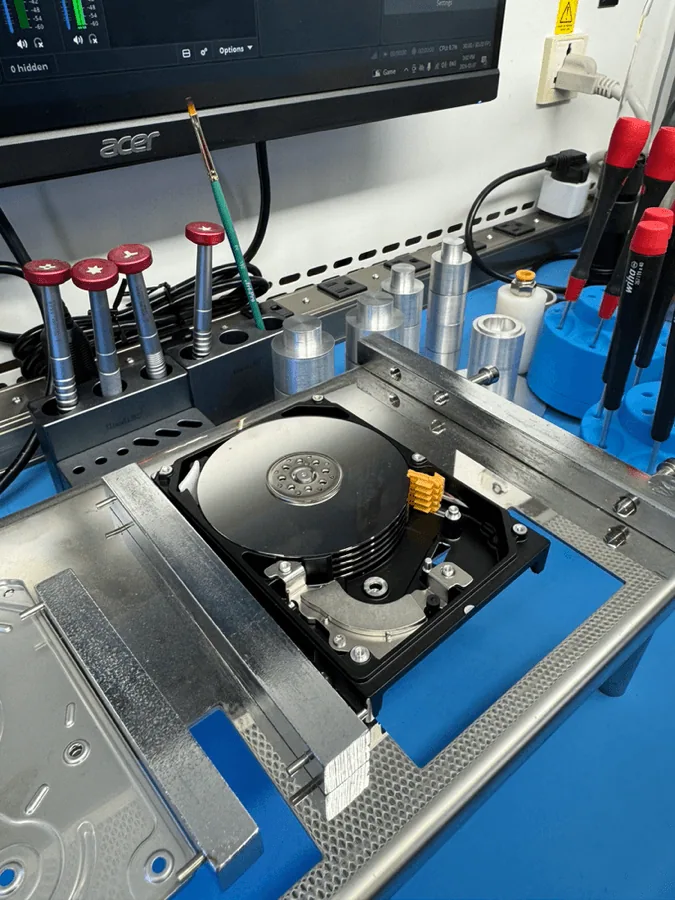
A dropped hard drive can suffer head damage, debris contamination, and platter surface damage. In this condition, powering the drive repeatedly or running software scans can make the damage worse. The recovery path begins with controlled lab handling, donor matching, head assembly replacement when needed, cleaning, stabilization, firmware handling, and careful imaging rather than normal file access.
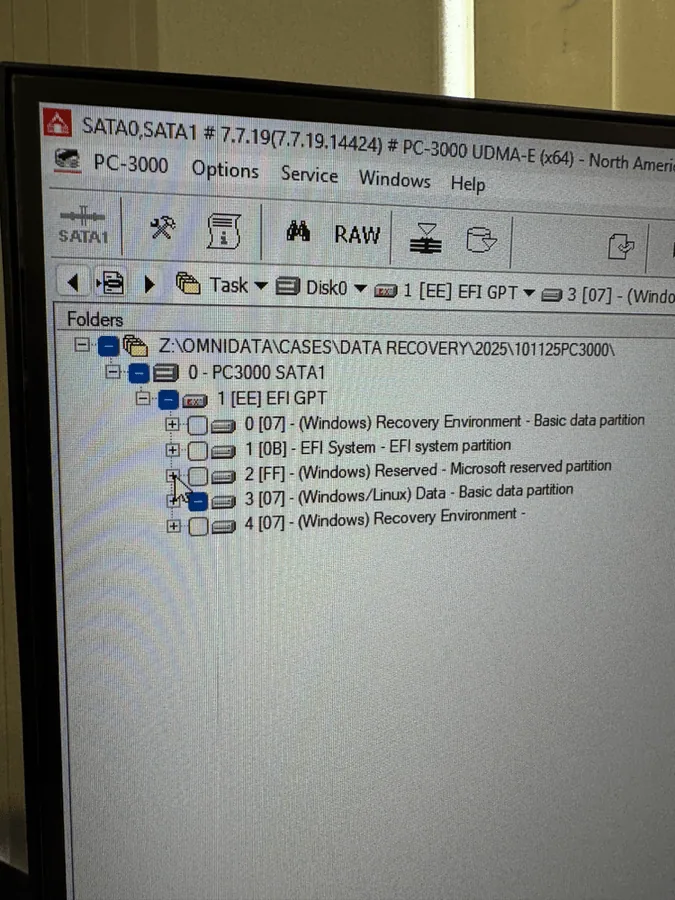
This WD model used a native USB interface, which creates an additional recovery problem. For professional firmware access and controlled imaging with PC-3000, the drive must be converted from USB to SATA so the heads, firmware behavior, read settings, and unstable areas can be managed properly.
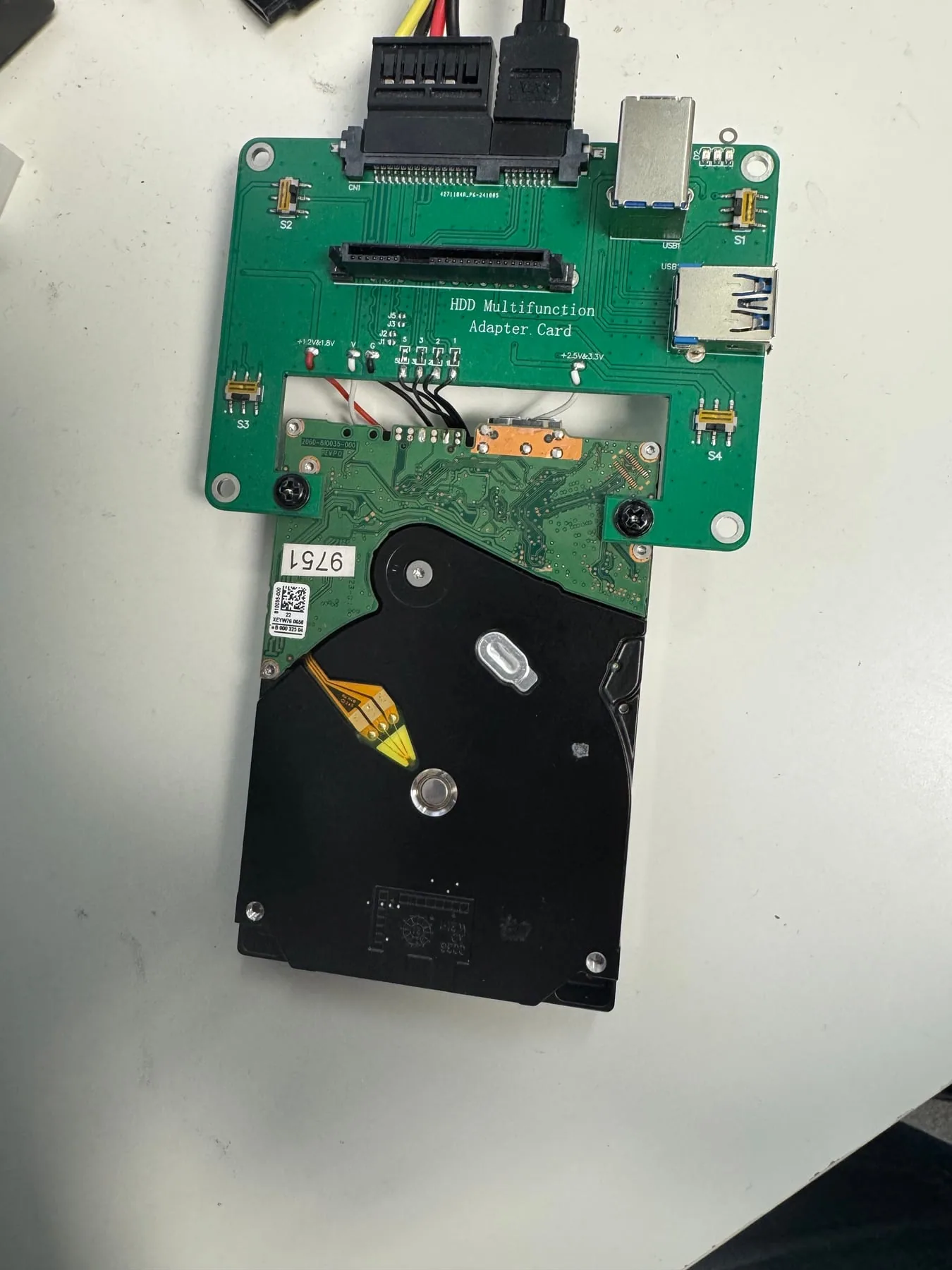
This case was especially difficult because a large portion of the customer data was concentrated on the damaged platter area. Repeated optimized read cycles targeted readable zones, reduced stress on unstable areas, and extracted the maximum amount of data possible from the damaged media.
Outcome
Most of the important data was recovered.
Repeated optimized imaging cycles extracted the readable areas while limiting unnecessary stress on the damaged media.
Lab photos
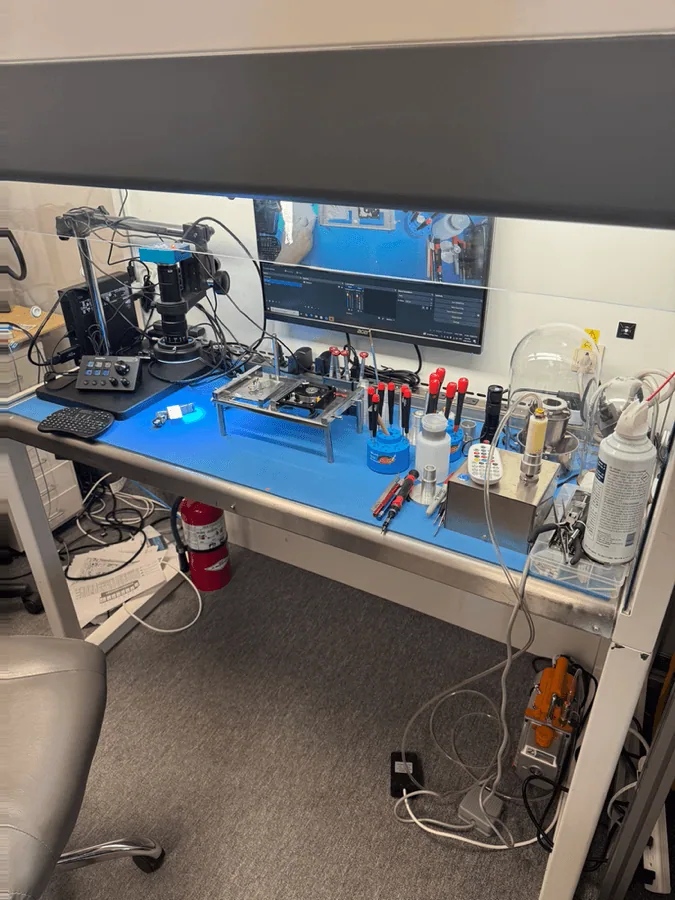
Physical hard drive recovery work from the case process.